
A Collective
Terra9 is growing as a collective whose members share a common vision of popularizing a sustainable, and regenerative way of contributing to the health of living systems. Please do not hesitate to contact one of us if you have any queries, we will forward your demand : info@terra9.net

Laurent
Regenerative Architecture
Laurent Biot is a qualified architect freelancer from Brussels (ULB). In addition to his work in Switzerland, he has worked in Senegal where he and his family lived for 4 years. There, he served as a consultant architect for the municipal team and the NGO Le Partenariat on heritage preservation projects (Unesco, World Heritage), and initiated the collaboration between the NGO and the Nubian Vault Association. Since a long journey in West and North Africa in the early 2000s, he has been advocating for the use of earth materials and solutions adapted to local conditions, solutions that he wants to make accessible to all. The idea of Terra9 was born. He enhanced his expertise with practical courses in bio-climatic architecture and completed a CAS in Regenerative Materials at ETH Zürich. He joined the board of directors of the Nubian Vault Association in 2025. Laurent Biot is also a partner at SARC Spühler Biot Architektur in Zurich, where he focuses on reuse and resource optimization. He currently lives there with his wife and two children.
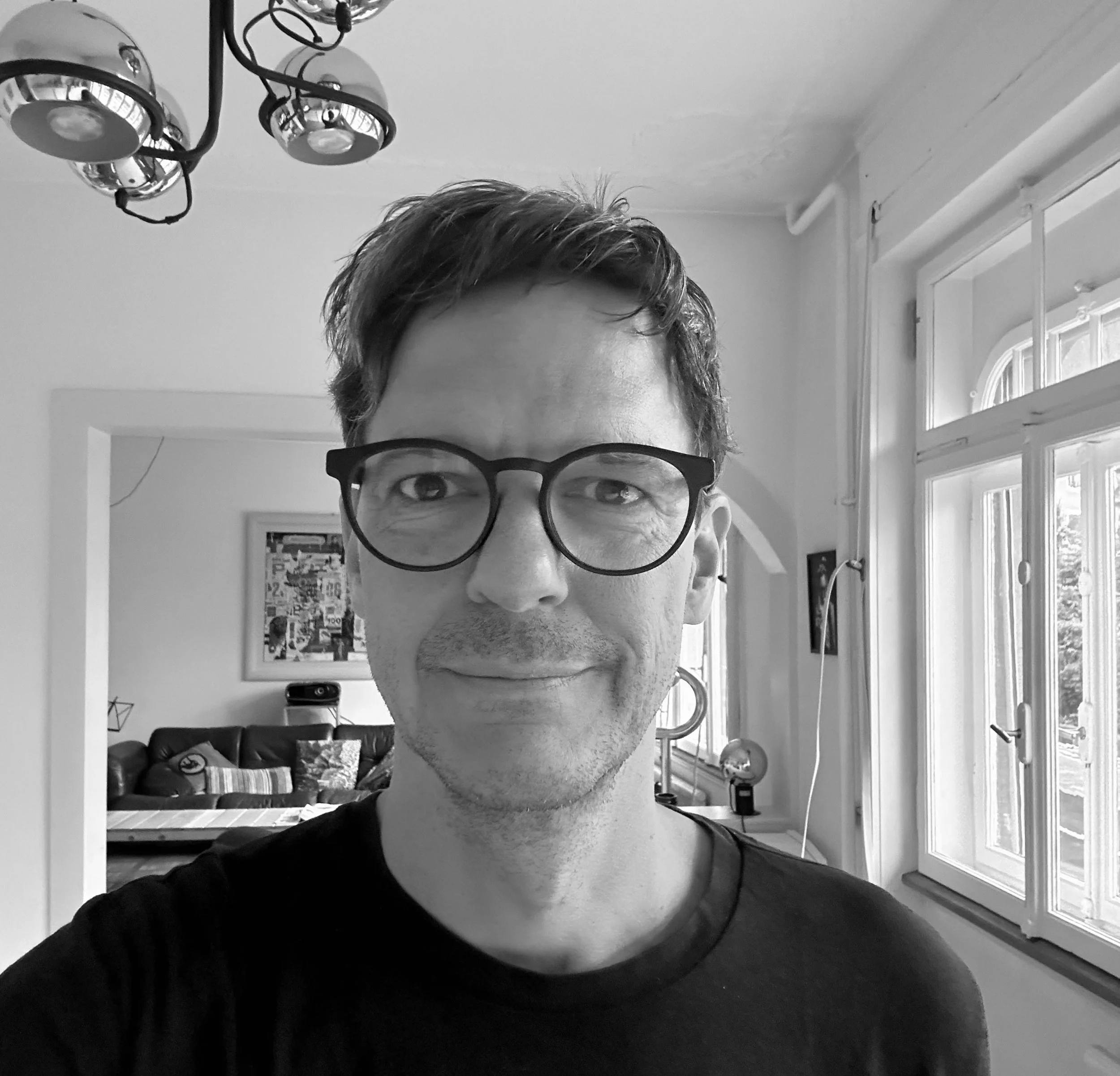
Tim Häberlin
Regenerative Development
Tim Häberlin is a Swiss architect and designer. After completing his MA in Architecture at ETH Zürich, his passion for innovation and materials led him to collaborate with various offices known for turning unconventional ideas into reality. Running his own furniture label provided a hands-on playground to explore materials directly. As an associate at theohotz partner architects, he led architectural planning teams on large-scale public transport projects, including a number of train stations in Switzerland and Austria. A year working in New Zealand sparked a deep interest in Living Systems Thinking—a framework that offers language and structure for reading deep patterns and "storying" place, allowing to develop strategic plans for high impact. In 2024, Tim became certified as a Regenerative Practitioner (TRP) through the Regenesis Institute. He is now focused on weaving this regenerative awareness into architecture and other creative disciplines.
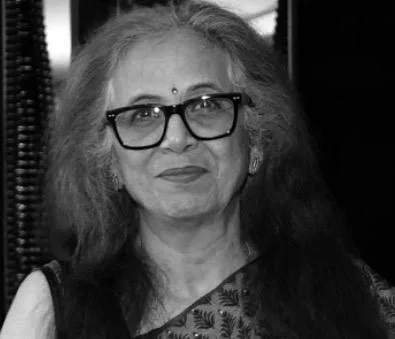
Sangita Kapoor
Regenerative Communities, India
Sangita Kapoor is an Indian regenerative design professional, with expertise in sustainability and Indian Knowledge Systems. She studied at Jadavpur University in Kolkata, where she earned an M.Sc. in Resource Management. For over three decades, she has combined design practice with teaching. She founded the Institute of Design Education (IDE) in Kolkata in 1996. Her core expertise is capacity building for eco-friendly, disaster-resilient structures. Through Blue Planet, the NGO she founded in 2015, she brings together traditional knowledge and scientific approaches. In Maharashtra, she has worked with indigenous communities to build their entrepreneurial capacity for disaster risk reduction. In Punjab, she has led the rejuvenation of water bodies using nature-based systems. She has also built disaster-resilient prototype homes in the Sundarbans. She conducts workshops in architecture, engineering and design schools across India. In 2023, she completed the Regenerative Design programme of the Regenesis Institute, followed by the With Life Fellowship in regenerative economics (Capital Institute & nRhythm).
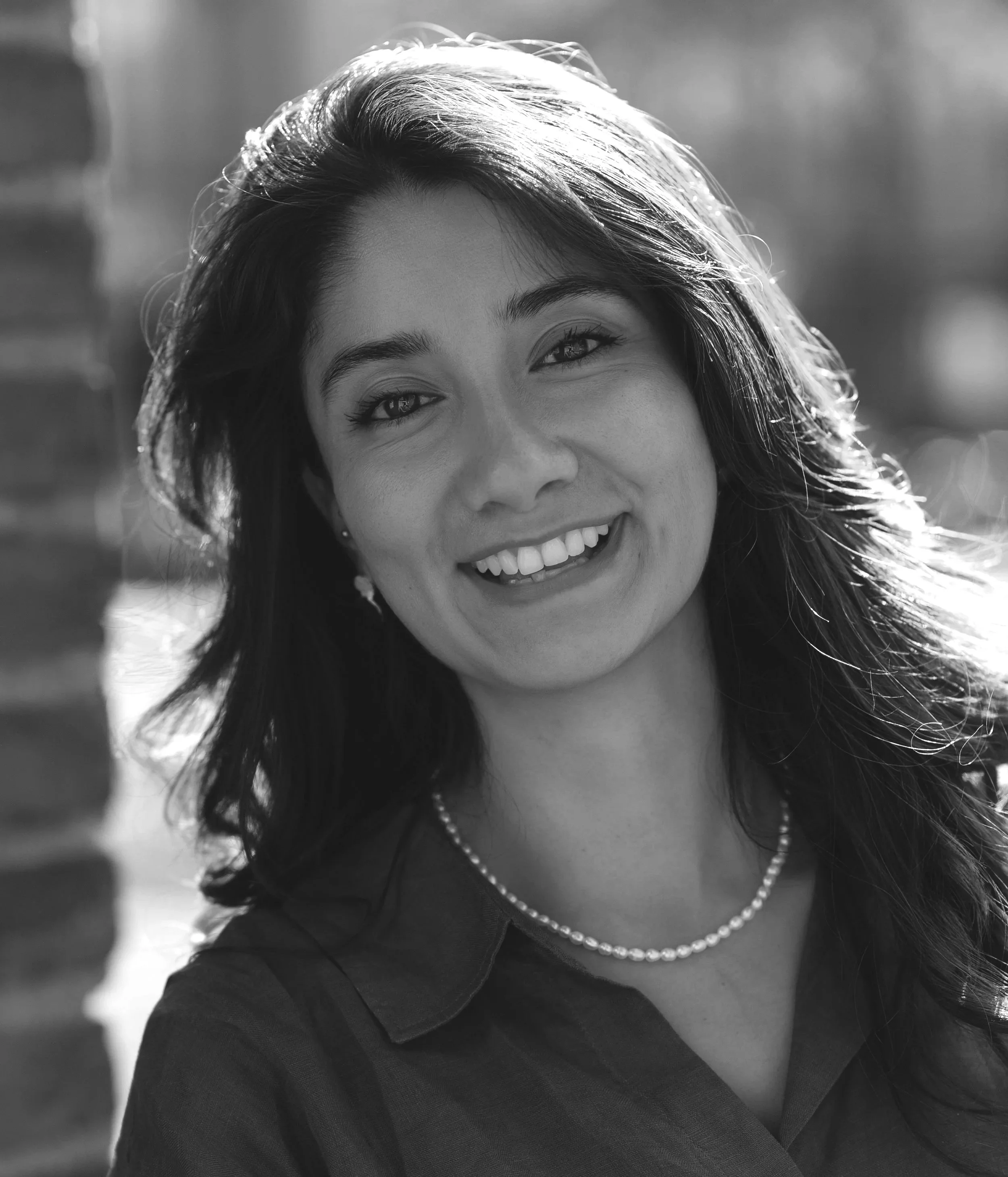
María José Chiriboga
Regenerative Design
Maria Jose Chiriboga is an Ecuadorian architect and energy consultant living in Munich. She studied architecture in Ecuador, moved to Germany for her master’s at the Munich University of Applied Sciences and later completed the CAS in Regenerative Materials at ETH Zürich. During her master’s, on a design-build project in a village in Oaxaca, she built with earth and timber for the first time, side by side with students, the village community and a local NGO, all working towards one shared goal. Since then she has worked with timber, earth and bamboo, and always together with the communities she builds with. For her, regenerative design is not a label but a way of seeing and acting. It starts from the idea that nothing exists in isolation. A building depends on its place, its materials, the people who make it and those who will use it, and each of these shapes the others. Working this way means understanding those relationships before intervening, and remaining flexible enough to respond to new conditions, needs and insights as they arise. Participation follows naturally from this. In every project she looks for the right way to bring people into the process, sometimes with their hands on the material, sometimes through site visits or decisions made together. Trust in earth, timber or bamboo, and in the whole system behind them, rarely comes from explanations alone. It grows when people experience the material and feel part of what is being built. In Don Juan, Ecuador, she lived for two months with ten women from the village while they rebuilt their bus stop in bamboo, a project funded by the Deutsche Gesellschaft für Internationale Zusammenarbeit (GIZ). Building together became a way to question gender roles and environmental issues, to recover local building traditions and to give bamboo a new, shared value within the community. At WSM Architekten she worked for several years on contemporary timber buildings designed to meet German timber construction standards, and the office is now part of her network of partners. She co-founded SoLA e.V. (Solidarische Lehm-Architektur), a non-profit network of architects, engineers and craftspeople committed to making healthy, natural building accessible to everyone through hands-on workshops and freely shared knowledge. Today she runs ARUPO, her own practice, which carries this way of seeing and acting into every project, accompanying clients and architecture offices in the choice of materials, systems, methods and energy concepts. For her, sustainability only becomes real when people can touch it, share it and build it together.

Lena N. Ndaw
Urban Solutions, Sahel Zone
Lena is a civil and urban engineer, graduated from INSA Rennes in France and FIUBA in Buenos Aires, Argentina.After nearly ten years at Vinci Construction France, where she served as Director of Coordination Studies on major projects such as Universeine for the 2024 Olympic Games and the Vinci headquarters complex, she chose to return to her roots in Senegal. From this decision was born Tabakh L’Atelier, a consultancy and construction firm of which she is the founder. The company specialises in the construction of low-energy villas distinguished by meticulous execution details. In response to climate challenges, Tabakh L’Atelier is firmly committed to advancing expertise in sustainable traditional construction techniques and bio-sourced materials. Lena and her team are developing a prototype inclusive villa constructed of compressed-earth bricks, operating on very low energy consumption and powered exclusively by photovoltaic systems. For her, this product represents the gateway to a greener, decentralised and decarbonised approach to property development within the rapidly densifying urban context of the Sahel. For Lena, joining Terra 9 is a mean to pool efforts and knowledge.

Michal Wozniak
Minimal Climate Impact
Michał Woźniak is a Polish Swiss structural designer. He studied civil engineering at the Cracow University of Technology (B.Sc., 2013) and ETH Zürich (M.Sc., 2019), and completed the CAS ETH in Regenerative Materials in 2021. Since 2018, he has worked with renowned Swiss structural engineering offices in Chur, Basel, and Zürich, and founded his own atelier. His work focuses on high-quality projects with minimal climate impact. Built works include an ultralight steel pavilion in Goryzce (PL) with Bartek Bukowski, the refurbishment of Zentrale Pratteln with STEREO Architektur, and a minimal house in Wohlen with Gwendoline Eveillard / Büro Drü. He won the competition for the transformation of the Hirschwiese Cooperative Housing District in Zürich in 2024 with PASTA MISTA, and more recently for the new bus station canopy in Schwyz with STUCKITREBO. He is currently engaged in the planning and realization of new projects with a regenerative, locally adapted approach.
Resources
-
ETH Zurich
ETH Zürich Sustainable construction focuses in the use of earth-based, bio-sourced and reused building materials.
-
Regenesis Group
Regenesis is a world leader in the field of regenerative development—an approach to land use, community development.
-
ISD Foundation
Integrated Sustainable Development is an operational Swiss NGO that works to facilitate resilient neighborhoods in under-resourced places.
-
Voûte Nubienne AVN
Nubian vaults offer a holistic constructive solution for affordable earthen buildings.
-
Fact Sahel+
Since 2010, the founders of the FACT Sahel+ network have been active partners, pooling their efforts and knowledge.
-
Lehm Ton Erde
“The oldest way to build. Brand new.” World's first prefabricated rammed earth building elements made of 100% earth.
-
BC materials
BC materials produce & sell circular building materials, based on excavated earth.
-
Oxara
Oxara specialises in the transformation of mineral construction waste into low carbon and circular building materials.
-
Elementerre
Created in 2010 in Senegal, ELEMENTERRE is a construction company specializing in earth construction systems.
Contact us
-
Please do not hesitate to contact one of us if you have any queries, we will forward your demand : info@terra9.net
-
Schaffhauserstrasse 78, 8057 Zürich Switzerland
-
Copyright – The content of the website cannot be copied, circulated, changed for commercial use or be passed on to a third party. Text, pictures, graphics, sound, animations and videos as their arrangement on the website are subject to the copyright law. Some of pages also contain pictures and links that are subject to the copyright protection of third parties. Although the contents of these pages have been published with as much accuracy as possible, the publishers will not take on any liability for the actuality, completeness and rightness of the contents. All rights reserved.